2020 left the world in turmoil. Our health, safety, and sanity are in jeopardy. What does 2021 promise?
It is February 24, 2021. I am watching the documentary TIME OF THE SIXTH SUN. This film has me wondering when white people will awaken to the reality of a multi-dimensional, multi-cultural world where they are not nor have they ever been a majority.
This summer was brutal in so many ways. The heat in South Florida was severe. Hurricane Dorian tore up the Bahamas and parts of South Carolina. My summer class was canceled due to low enrollment, leaving me in a financial bind. However, I survived, thanks to friends and family.
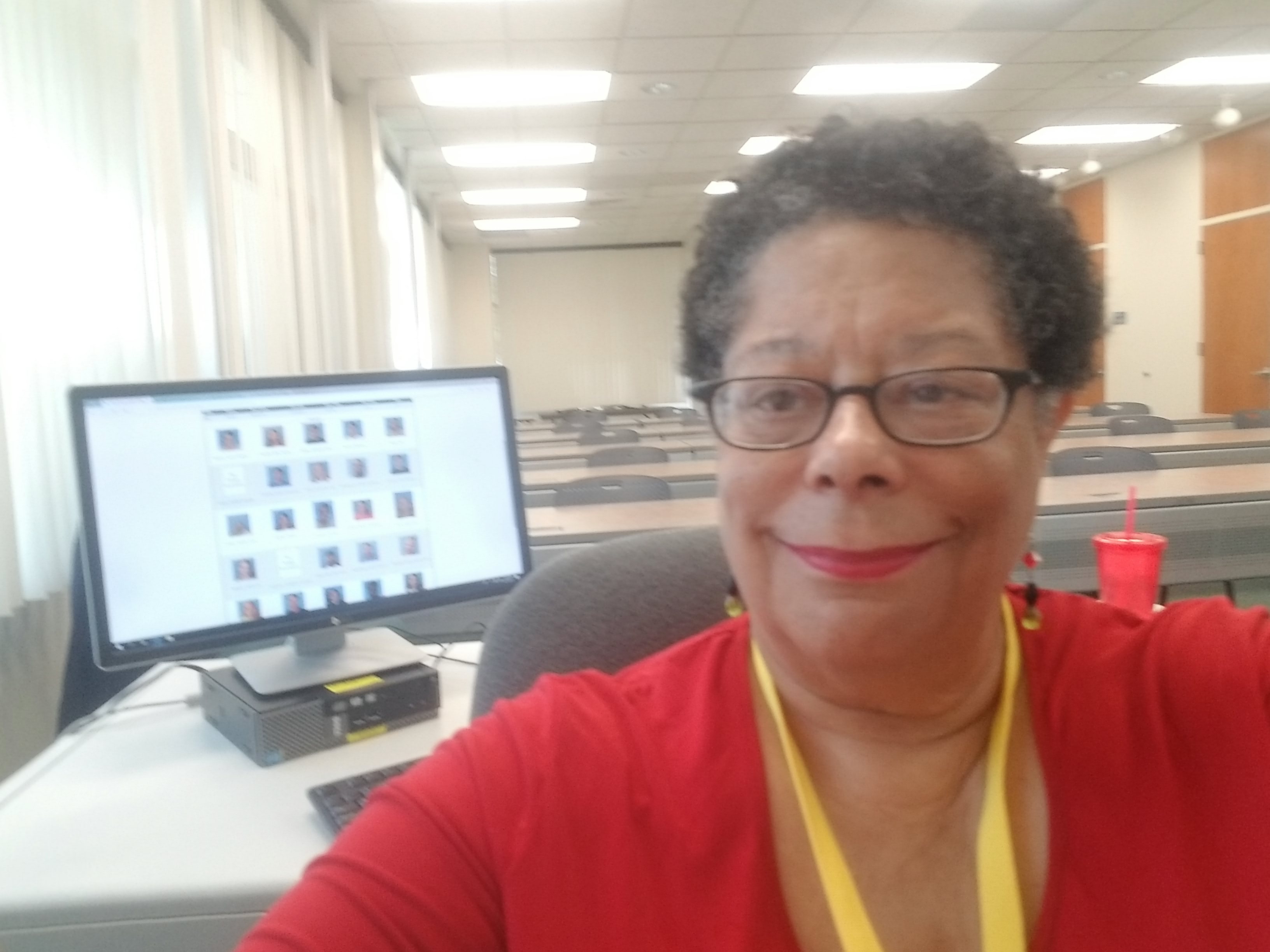
Now, I am teaching four classes at Palm Beach State College (PBSC) in The Fundamentals of Speech Communication. Two classes are at the Central Campus in Lake Worth and two are at Palm Beach Gardens. I have over 100 students.
The first assignment was to write an essay, giving me an opportunity to see how well (or unwell) my students write. They must learn the Rules for Writing in a scholarly manner, which most of them are unfamiliar with.
These are some of the rules for scholarly writing:
Documents are formatted in APA Style.
Your essay is double-spaced and flush with the left margin (1” around).
The font is Times New Roman, 12 pt.
Do not use CAPS or BOLD.
A paragraph contains 3 to 5 sentences.
Write in the past tense with subject/verb agreement.
Do not write run-on sentences or incomplete sentences (phrases without a verb).
Do not start a sentence with a gerund, a verb ending in ‘ing’.
Do not write a question, unless it is a research question. Write simple, active, declarative sentences.
Double quotes are used with direct quotations and require an in-text citation and must be listed in ‘References’ on a separate page.
Use single quotes to emphasize a word or phrase (‘Normal’).
Do not use contractions (don’t = do not; I’ve = I have; I’m = I am; isn’t = is not).
Avoid clutter, using too many words to make a simple statement.
Do not use absolutes: ‘all’, ‘always’, ‘everyone’, ‘never’.
Be careful about putting commas where they belong. Research ‘adverbial phrases’ to see where the comma goes. Commas go before and after an adverbial phrase that answers the question ‘when’, ‘where’, ‘how’, ‘how much’, or ‘how many’.
Do not use slang: A kid is a baby goat. In scholarly writing, use ‘child’ or ‘children’.
An ellipsis (. . .) is only used to omit words from a direct quote.
The word ‘also’ goes at the beginning or end of a sentence. Do not separate a subject from the verb (‘I also study’ should be written ‘Also, I study’ or ‘I study, also’).
Write the word for numbers one through nine. You may use 10, 11, 12, etc.
Spell out acronyms the first time you use them, for example, American Psychological Association (APA), Center for Disease Control (CDC); National Football League (NFL).
What unexpected event made you reimagine yourself, your dream, your goals?
Did your self-determination increase?
Were you more self-motivated?
Did you discover self-definition?
Be humanists. Celebrate our differences!
The best response to the question “Do you fit the mold?” is this one:
I believe I fit some molds. I fit the mold as a teenager with big dreams, I fit the mold as a martial artist, I fit the mold as a film enthusiast. Everyone has a mold they fit, most often, it is more than one mold. Even those that are considered special have at least one mold they fit.
I am enjoying this experience because I love seeing the lights go on in my student’s eyes. I love it when they tell me they are learning something new or being reminded of something they learned as a child. Although they are challenged with grammar, sentence structure, clutter, and adverbial phrases that require a comma, their essays give me hope that millennials are more humane than their predecessors.
I am most grateful for Spellcheck in WORD and Grammarly!
Today’s blog is indicative of the situation most black women musicians and professors are in. We are marginalized and living under the poverty line and this is all wrong!
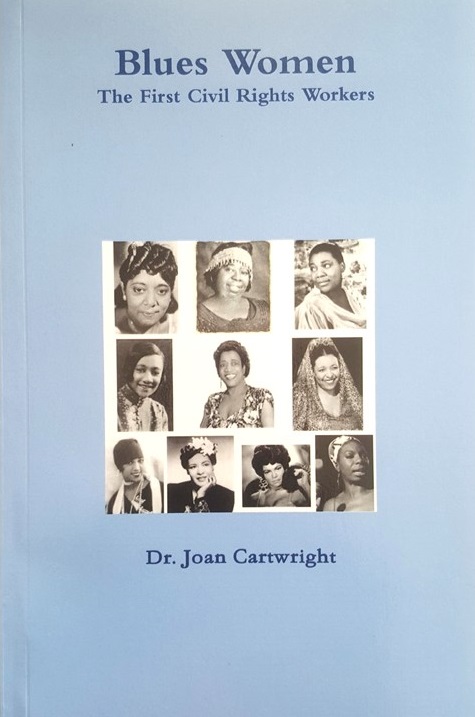
A New York Times article I read, today, motivated me to post this blog about Blues Women, the first civil rights workers.
Brent Staples wrote, Francis Harper “vexed white women reformers by accusing them “of being directly complicit in the oppression of blacks,” and by demanding that they rid themselves of racism.”
In my book, I discuss how “Black singers in the United States of America emerged from Spirituals and Blues to develop Jazz. Their free-spirited songs delivered messages of liberation, signaling to Africans in America that they could be free.”
Besides being effective entertainers, “Blues women provided the primary means of healing of the human spirit with their musical dalliance that we can forever be delighted with and grateful for. The paper concludes that Blues women Mamie Smith, Gertrude ‘Ma’ Rainey, Ida Cox, Alberta Hunter, Bessie Smith, Josephine Baker, Ethel Waters, Billie Holiday, Nina Simone, Eartha Kitt, and Miriam…
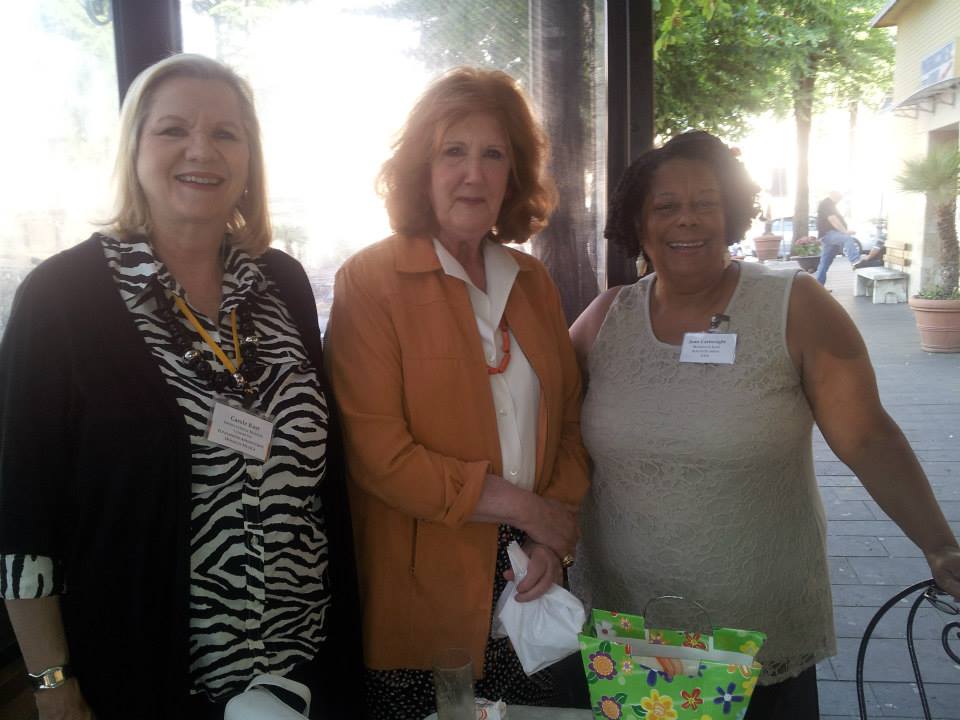
Over 10 years ago, it was my fortune to connect with the founder of Fondazione Adkins-Chiti: Donne in Musica, Patricia Adkins-Chiti, who became and remained my mentor throughout the development of Women in Jazz South Florida, Inc., a non-profit organization founded in the USA to promote and support women musicians, globally. Beyond her encouragement and motivation to do the work for our organization, Patricia mentored me through my doctoral process and provided me with material to include in my dissertation – Women in Jazz: Music Publishing and Marketing. Also, in 2013, I was invited to be among 40 women composers at the WIMUST Conference in Fiuggi, Italy, where I met Patricia in person and enjoyed spending time with her.
Carol, Patricia, and Joan at WIMUST Conference in Fiuggi, Italy, in July 2013
Today, I was tagged by Irene Robbins in this post from Silvia Costa:
You have not had difficult students until you teach in a foreign country. Usually, foreign students are much more respectful than American students. However, cultural differences make for challenges.
In my first week of teaching Speech Communication to Chinese students, I realized that the majority of them were not going to be as responsive as I needed them to be. In each of two classes, one or two students answered all the questions. One reason is that those students who responded had a better command of the English language. The second reason is that they were more outgoing than their fellow students.
One professor informed me that Chinese students do not want to be embarrassed in front of their peers. That helped me to understand them better. But I thought because they would be chatting away with each other as they entered the class that they would be talking to me much more. NOT. I had to drag answers out of them, making my job more difficult than it should have been.
Everyone wants to be seen heard and appreciated. ~ My second ex-husband, Jesse.
Yesterday, one of my Facebook friends left this message on a photo I uploaded:
I admire you so much. You are really a great example of courage and a mentor. I often pause to think what I can do better because you inspire me in all your accomplishments. You are a great example of success. ~ Deborah
For many years, I would say to someone who complimented me, “Can I get that in writing?” LOL
Well, there it is. Deborah put it in writing. Ahhhh, the joy of the Internet!
In 1995, a musician referred to her as a diva. She liked that. She felt it. By 1998, she accepted the title Diva JC and the rest is herstory. Doctoral Candidate Joan Cartwright has been on stage for decades. She loves to sing and her audiences have been innumerable.
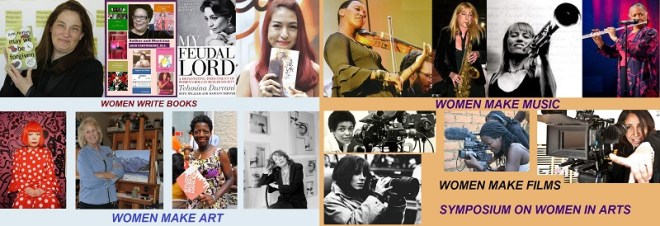
TALK is cheap. DOING something costs time, money, and THINKING. I’ve been an advocate for women musicians since 1997. I founded a non-profit organization to promote and support women musicians in 2007. This year, we’re calling for a Symposium on Women in the Arts because all people learn through the ARTS. 115 people registered for this symposium to be held in Washington, DC, on Tuesday, August 4, 2015 @ 9 a.m. to 5 p.m. The problem is we tried to hold it at The White House but were denied access. Then, we tried the Library of Congress but they don’t allow groups to hold events during the day. Now, we’re trying George Washington U and Georgetown U but the Women’s Studies Departments at both schools “do not have resources” for this event. It’s ridiculous. Women are marginalized even more than people of color but they just do not see it. They do not receive the financial support earmarked by government funding of the arts. They are omitted from all-male big bands and orchestras. And they don’t fight to make things CHANGE. When women join together to change the world, everything will change. But like the poster above stated, “We have jobs, homes, cars and are ALLOWED to take little breaks (vacations) from time to time so we believe the illusion that we are free.” Women are second class citizens to males, Black and White. The only difference is White males have economic power (especially GAY WHITE MALES, who have no women to answer to or care for). Black males have little economic power but still tend to dominate women. When will women join together to make CHANGE in this world. TALK is cheap. We must DO something. If you are a women artist, author, architect, musician, composer, actress, filmmaker, or other cultural producer, Register for the symposium at the link on this page: http://wijsf.com/events/symposium.htm




 Carol, Patricia, and Joan at WIMUST Conference in Fiuggi, Italy, in July 2013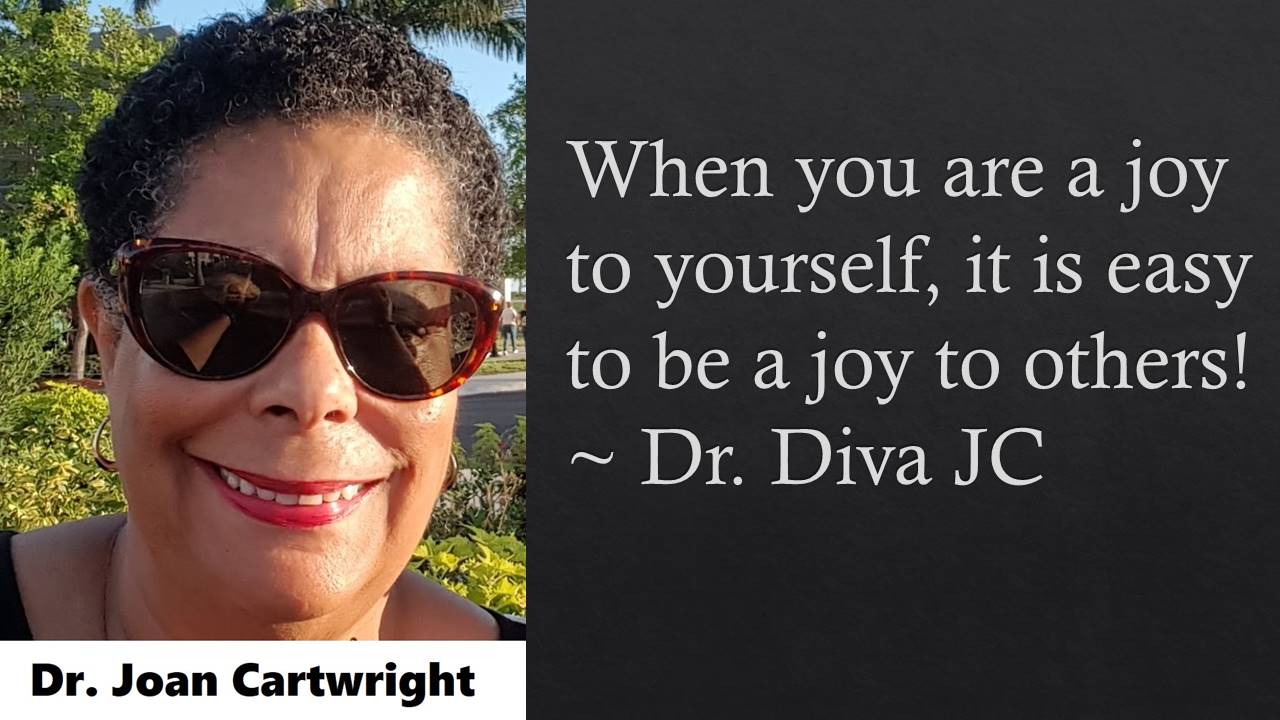
 Dr. Diva JC - Scholar . Teacher . Author