

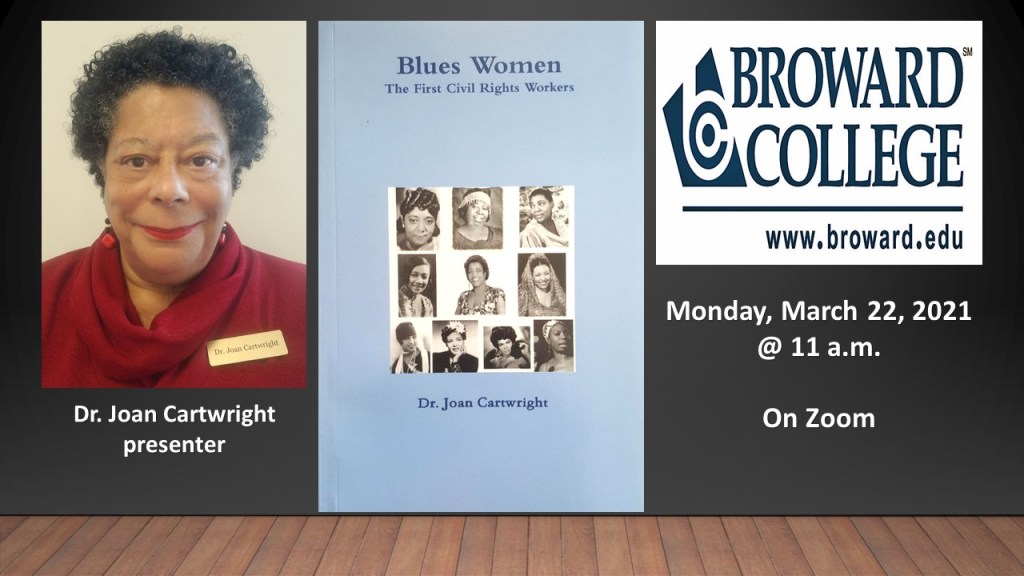

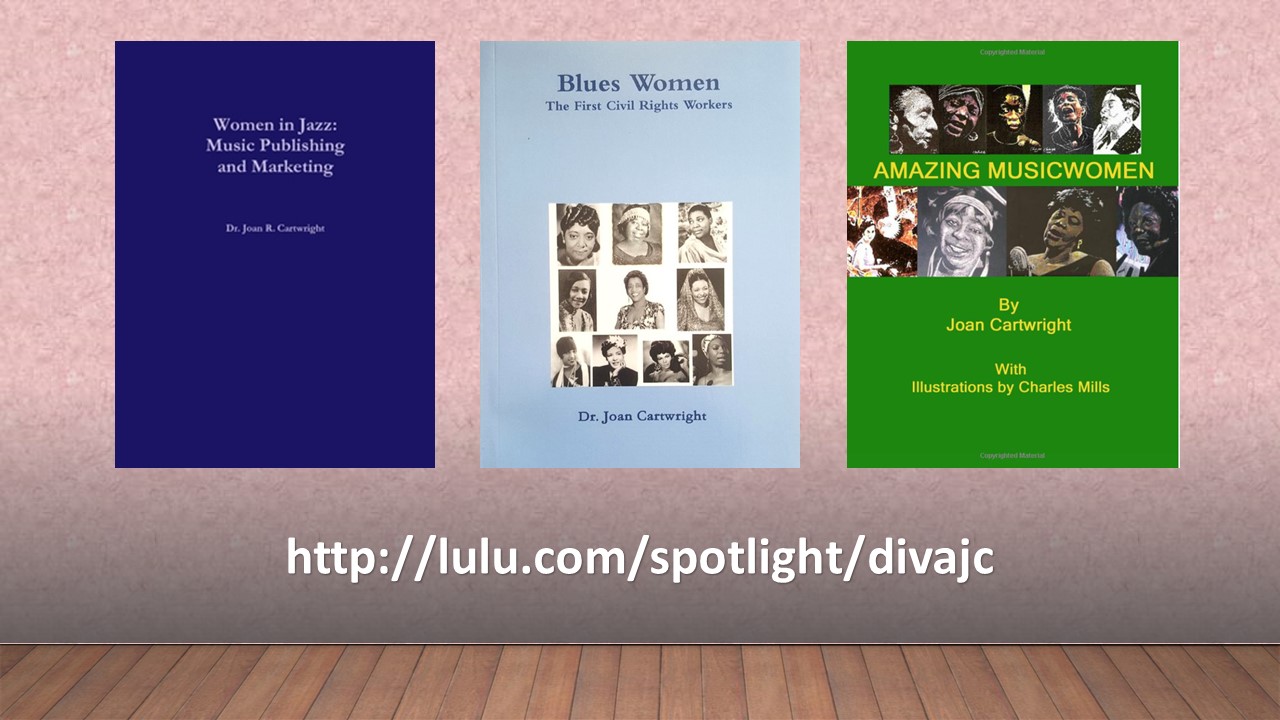

My response to Andromeda Turre who asked me what it means to be a woman in jazz.
Being a woman in jazz is the crux of my existence. 70 years ago, I sang Somebody Loves Me, onstage. The footlights mesmerized me. But the music captured my heart. In my later years, promoting women musicians, globally, is my mission for Women in Jazz South Florida, Inc. Visit us at www.wijsf.org
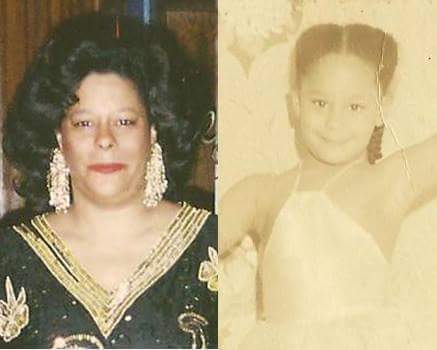













You work all your life to fulfill your purpose. You put in hours to learn your craft, instrument, or discipline. You grow older and retire from your profession, and you wonder, “Who really cares?”
Then, you meet a group of women who recognize your accomplishments. That makes it all worth it. The group of women who hold me in high esteem, and I them, is the National League of American Pen Women. I was inducted into the Boca Raton, Florida, branch by Sheila Firestone.
In 2019, Virginia Franklin Campbell submitted this article about me to the NLAPW Magazine. http://www.nlapw.org/legends-joan-cartwright/
I am honored and humbled by the appreciation shown to me by these talented authors, artists, and musicians.
Then, in 2020, Charlene Farrington, Director of Spady Cultural Heritage Museum, chose to exhibit my collection of jazz artwork from September through February 2021. Ah, in the middle of a pandemic, there is a slice of light!
See some of the art and my story about the art collection at these links:
WHO ARE THE WOMEN OF JAZZ? SPADY KNOWS
https://spadymuseum.com/exhibits/jazz-the-joan-cartwright-collection/
https://spadymuseum.com/jazz-the-joan-cartwright-collection/

A Vision for Books and Bookstores
We see a world where we, the people, no longer buy into the lie that the booksellers have been handing us about providing us with what we’re wanting to read – because we’ve now realized, beyond all doubt, that they’ve been providing us with what they want us to read in order to satisfy their own self-serving purposes.
Thus, we see a world where bookstores have changed their priorities entirely, so that now when you walk into a bookstore, the books which are most likely to bring you happiness and fulfillment are displayed prominently in the front of the store – while the books which were written solely for the purpose of frightening you or lining the author’s pockets are relegated to the obscure shelves in the back of the store.
We also see children’s books, now, written and distributed so that the child’s highest and best interests are served; and where the subject matter of these books is meant, not to subtly encourage our children to become better consumers, conformers, or soldiers, but to encourage them to be more resourceful, creative, and free-thinking people.
And finally, we see a world where authors, publishers, and booksellers alike have all moved away from praising and offering us stark tragedies. Now they have lightened up and filled the shelves with books that are meant to help us, books that warm our hearts, and books that have happy endings.
When we think of fortune, we think of massive wealth, treasure hunts, gold mines, and fantastic hordes of gems and jewels. But this year, my idea of fortune is how I am feeling right now, today. Yesterday, I submitted final grades for my four classes of Speech Communication with 110 students. Also, I completed editing my roomie’s book on graceful aging.
Today, I feel accomplished, relieved, and euphoric that, during a pandemic, I am still earning a living by doing what I love. I enjoy teaching young people how to communicate impactfully. In my classes, people age 16 to 50 learn three things:
Now, that looks like a shortlist for a college course. But ask my students if it is that simple. They will tell you it is not.


So, I’m feeling accomplished because I managed to pull 90% of my students through the switch to online learning, once the lockdown caused our school to close. Of 110 students, seven dropped the course before the lockdown. Nine failed the course because they gave up due to technical difficulties. Perhaps, they did not have a computer or laptop. They may not have WiFi or an internet connection. They could have children at home and not be able to concentrate on schoolwork. There are a plethora of reasons why 16 students did not get through my Speech Communication course.
On the bright side, of the 94 students who made it through, there were:
I am off for 18 days. I will teach this course over the summer in three classes. Two are 12 weeks and one is six weeks. My challenge is to revert back to my lesson plans for shorter courses since the Fall and Spring terms were 16 weeks long. The fortune is that I taught this class in ONE month at three other schools. So, my real goal is to relax and enjoy my time off.
Happy Springtime!
 While whites in the jazz music industry got rich, black musicians did not reap equal benefits. The industry caused a great deal of exploitation and discrimination by whites against blacks. Rex Stewart said, “Where the control is, the money is. Do you see any of us running any record companies, booking agencies, radio stations, music magazines?” (Kofsky, 1998, p. 19).
[Source and References: https://www.york.cuny.edu/academics/writing-program/the-york-scholar-1/volume-6.1-fall-2009/the-social-effects-of-jazz]
Linked from the blog post: Who owns Jazz?
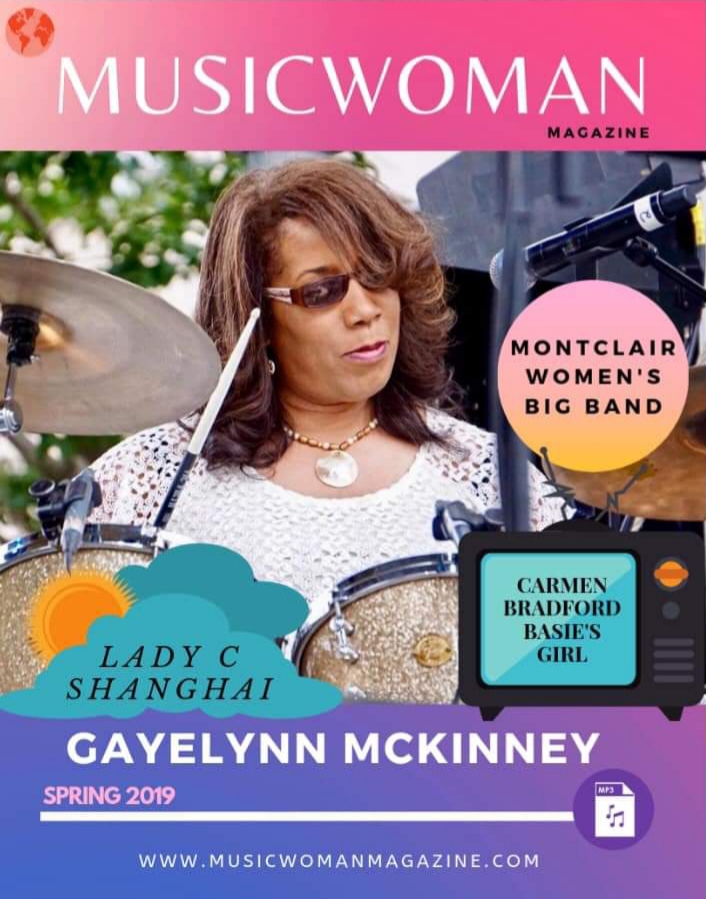
It’s 2020! It’s 22 years since Frank Kofsky recorded Rex Stewart’s quote. The part about controlling a music magazine is fulfilled in www.musicwomanmagazine.com
 I own Musicwoman Magazine. I envisioned it, planned it, funded it, and created it.
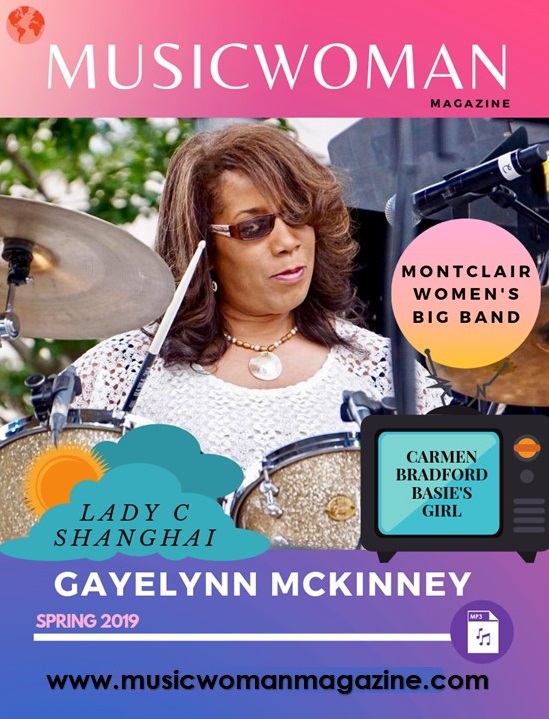
The second issue is publishing in Spring 2020.
I am humbled by this accomplishment that enables me to create the narrative for and about women musicians, especially, women musicians of color who bring so much love, joy, and talent to the world.
Surf our site at www.wijsf.org where we promote women musicians, globally!
All the best in 2020!
Dr. Diva JC

 Diversity and Inclusion Racket Rules
By Dr. Chanda Prescod-Weinstein [https://theriveter.co]
#1: If you have to choose between supporting a Black woman and supporting a white (male) ally you feel has been supportive of Black women, definitely blackball the Black woman because diversity and inclusion is about supporting allies.
#2: Allies always deserve awards and cake and cookies.
#3: It’s important to persist in saying “women and minorities” as if someone can’t be both. In relation, regularly point out that there are increasing numbers of women at your conference without ever noting that almost all of them are white.
#4: Use “intersectionality” a lot but never read Kimberlé Crenshaw’s papers.
#5: Say that you can’t challenge inappropriate behavior because the person engaging in it is a person of color, so you just have to watch terrible things happen and can’t step in.
#6: If you’re white, intentions are all that matter. If you’re not white, what matters is how you make white colleagues feel.
#7: When a white woman cries, it is sad. It’s too bad they’re so emotional but you just have to be sensitive. Black women having any kind of feelings is an overreaction, however.
#8: Pretend like Black, Indigenous, and POC (BIPOC) men don’t (sexually) harass Black, Indigenous and other women of color/nonbinary people and like we’re all one giant monolith.
#9: Treat “underrepresented minority” like it is a racial monolith. Never think through what it means when you categorize white Spaniards as people of color. Assume that Indigenous people and non-Black people of color are never anti-Black.
#10: It is always better to publish more (mediocre) papers than to make room for Black and Indigenous women to thrive, so always choose the white candidate with more traditional qualifications, even if your workplace is desperately white.
#11: Always assume Black women and other POC are not disabled. Assume all the disabled people are white. Also, assume disabled people are just being difficult when they ask for what they need and are entitled to, but also make sure to regularly say that inclusion and access matter a lot.
#12: Assume that you can just hire women from other countries to address your department’s diversity issues. If you’re international, complain that domestic people of color complain too much, and don’t work hard enough.
#13: Assume women from other countries don’t need support confronting racism, xenophobia, and sexism because America is great.
#14: Talk a good diversity, inclusion and equity game but also never report the racist and sexist comments you hear during hiring discussions to your affirmative action office or literally anyone who might do something.
#15: Give props (awards, cookies, cake, parties) to white people who do diversity work and question the basic competence and time management skills of everyone else who does it (especially if they seem better at it than your local white award winners).
#16: Diversity is important but not at the expense of excellence. Tell that to students of color wondering why their professors are all white. Tell that to the scholars you could be hiring to teach those students, if only they were excellent enough. Also remember that diversity of thought is important, which is why we value those who seek to debate the value of people of color and Indigenous humanity and cultures.
#17: It is totally fine to take in a Black mentee that you treat like a pet you saved from euthanasia, but please don’t do anything radical like put up a sign saying your student’s life matters. Anti-racism and diversity do not go together.
#18: Exploit strategic disagreements between Black/Indigenous/people of color (BIPOC). Exploit them for your own professional gain if you can! Especially if you are BIPOC: make sure you are the only one who gets through the door.
#19: Threaten white people who are being good accomplices to BIPOC with professional ruin. If you can, refer to them as, “witch hunters!”
#20: Publicly state that you want a diverse applicant pool, heavily recruit BIPOC candidates, take up their time with interviews, and never tell them there’s no way the decision-makers see them as anything but a checkbox for the higher-ups. Hire a white guy.
#21: Assume that BIPOC with less prestigious institutional affiliations and professional accomplishments are individual failures, not people who might do well given the right circumstances. Assume those with lots of prestige didn’t earn it.
#22: This one is very popular: Organize diversity fellowships and hiring programs with very little buy-in from the people who make the final hiring decision. Do nothing to incentivize buy-in from those people. Wonder and/or don’t care why the program fails.
#23: If you’re a white queer man, demand access to programs designed to encourage people of color and white women’s participation in your area of work. Forget to pretend that you care about non-binary people. Think only of yourself.
#24: Only hire BIPOC people who have secured lasting success somewhere else. Why increase overall numbers nationally when you can cheaply change your local numbers? Don’t give new voices a chance — they’re risky and too activist.
#25: Never ever talk about colorism. You don’t even see color!!!
#26: Completely depend on intellectual work coming out of ethnic studies and feminist studies programs that shape social science research on diversity. Do nothing to support these programs when they are attacked by the press and politicians.
#27: There is nothing more dangerous than a woman or non-binary (enby) person of color who knows what they are about and refuses to sell themselves to you. Literally, they are very dangerous. Shut them down.
#28: If you must stop a person of color from doing something harmful, do it in the most damaging way possible. Treating people like they are disposable is the best way to build a more diverse, inclusive and equitable world.
#29: Use “decolonization” and “diversity” interchangeably. Call Black people settlers. (Finally, something where white people and Black people are equally at fault!)
#30: If you’re a university leader, hire a VP for diversity, equity, and inclusion when students ask for more BIPOC tenure track faculty. If the new hire is a white man, tell students of color who complain that they are racist. If they are a BIPOC, give them very little institutional power.
#31: If you’re going to hire Black people, only hire Black men. Remember, it’s about “women and minorities.” All the Blacks are men. Ignore the trail of sexual misconduct stories following him around because Black men have it hard, and Black women aren’t even on your radar. Besides, he’s Black, what else do you expect from him?
#32: Make sure to always talk to Black people about their tone. Until they sort out their tone, white people can’t stop being racist. That’s how that works. When Black people cater to white people’s emotional well-being, white people will start treating Black people like they are equals.
#33: Assume BIPOC want to do diversity work and are competent to mentor other BIPOC. Never mind that BIPOC who get through the door have often been selected for their ability to mimic the ways of white academics.
#34: Extract work from Black women and enbies. Then extract some more. Then some more. Then some more. Note with curiosity that Black women academics seem to die young/lose their minds. Ask the local Black woman/enby to explain how to fix this.
#35: Say you support a woman of color, you’re a big fan in fact, but also remember that her tweets come on too strong in your view. Make a point of excluding her from conferences and other events, thereby validating all of her angry tweets.
#36: If you’re white, only listen to BIPOC that you’re friends with or who make you comfortable.
#37: Start a Diversity and Inclusion business, take ideas from Black women and never credit them, privately gossip about how those Black women are a problem because of their tone and attitude. Build your business around saying you are a pro-Black woman.
#38: Reading is not fundamental. Anyone who believes they care about diversity, equity and inclusion can be a leader on diversity and inclusion.
#39: Ignore the fact that Asia is a giant umbrella with over 50 ethnicities and national identities. Also, don’t bother specifying Asian-American when that’s what you mean. Always just say “Asians.”
#40: Because some Asian ethnic groups are overrepresented or fairly represented in science, act like they all are. I mean, is the difference between Hmong and Taiwanese even important?
#41: Once you have a token BIPOC, preferably a woman and/or femme, to shut down the radicals, consider your work done for the decade.
#42: The BIPOC who agrees with you is the good one.
#43: Never go beyond the bare minimum of what the ADA requires. Like jeez, most of the time people don’t even respect the ADA, so you’re pretty cool.
#44: It doesn’t matter whether the Native American you hired is in good relations with their community. All that matters is that they checked a box, and now you get to check one too! It also doesn’t really matter if you ever learn anything about the tribal communities that are local to you.
#45: Instead of hiring minoritized tenure track faculty who are competent at mentoring marginalized students at your university, only hire lower-income full-time staff who have no hope of job stability at your institution.
#46: Proclaim poverty in the face of an endowment that is only $300 million. Say you’d stop hiring only white faculty if you just had $1 billion instead.
#47: Admonish minoritized people who, after years of begging for institutional support, organize wildly successful events without institutional buy-in. They should have let you get credit for their hard work and success!
#48: If they can’t beat you, pressure them into joining you. Institutionalize critics with new, powerless administrative roles, ASAP. Then when things are still overall terrible, you can blame that person and say it was all the POC’s idea.
#49: Organize events on diversity, intersectionality, and decolonization. Confine abstract submission to “practical” suggestions that don’t disrupt the status quo. Select participants by computer, because expertise and investment don’t matter.
#50: Act like America hasn’t always been racist. Act like America isn’t a settler colonial nation. Act like Native American sovereignty is just a matter of inclusion.
Dr. Chanda Prescod-Weinstein is an assistant professor of physics and core faculty in women’s and gender studies at the University of New Hampshire. Find her on Twitter @IBJIYONGI and the web: http://profcpw.com.
Throughout the years, several people and organizations have felt me worthy of being honored. Those moments are documented here.
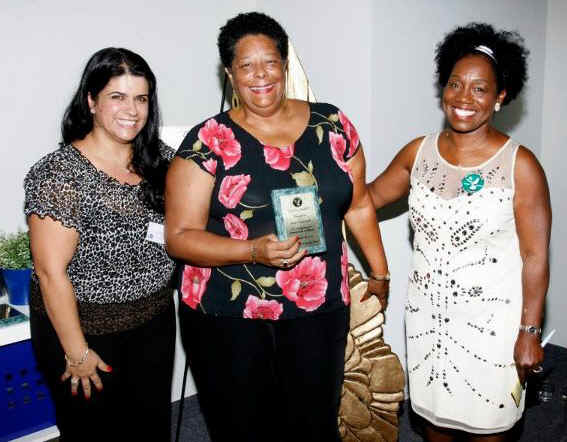
Priscilla Dames (right) of Wingspan Seminars in Miami, FL nominated
Joan Cartwright for the 2011 Pea’ce Award.
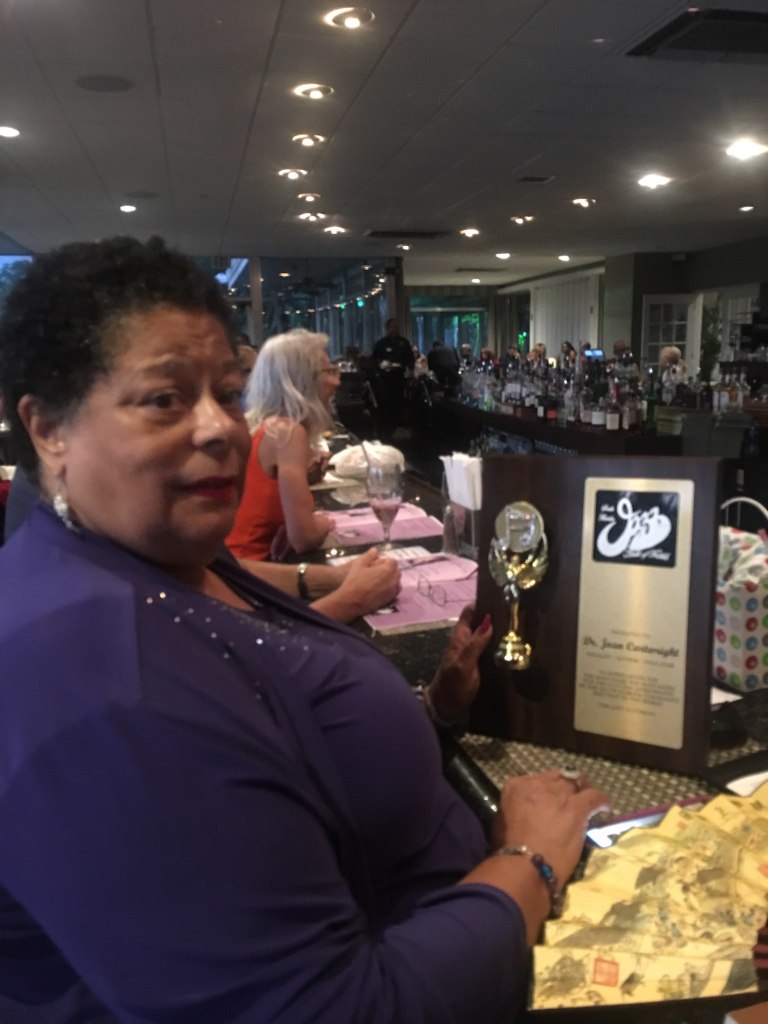
Thanks to Howard Mandel and Laurie Dapice for honoring me as a 2019 Jazz Journalist Association (JJA) Jazz Hero.


Thanks to Brian Zimmerman, Digital Editor of Jazziz Magazine for presenting the award. Thanks to Marika Guyton for organizing the award ceremony. Photos: Gregory Reed


Thanks to Old Dillard Foundation for partnering with Women in Jazz South Florida, Inc. for this program
The universe provides. Last week I got the news that the Speech class I taught for 3 years is moving online, leaving me without income in June-July. I cried. I felt helpless. However, as things always go, I have the opportunity to teach 3 classes at PBSC in Palm Beach Gardens, starting May 15, through the summer.


Dr. Joan Cartwright is a professor of Speech Communication at Southeastern College in West Palm Beach, Florida and in 2017 completed her Doctorate in Business Administration/ Marketing (DBA) at Northcentral University in Arizona, but it’s for her writing, composing, lecturing, producing, research and documentation concerning women composers (especially) in jazz and blues, and for her founding in 2007 of the non-profit Women In Jazz South Florida, Inc., that the Jazz Journalists Association hails her as 2019 South Florida Jazz Hero.
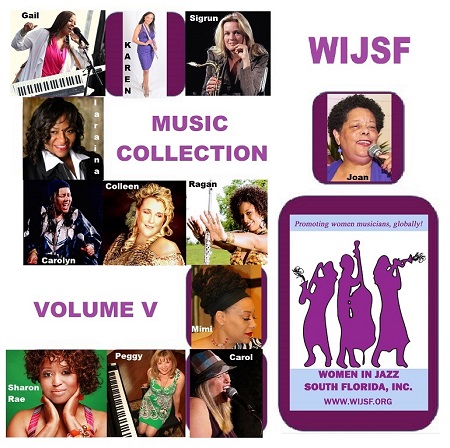
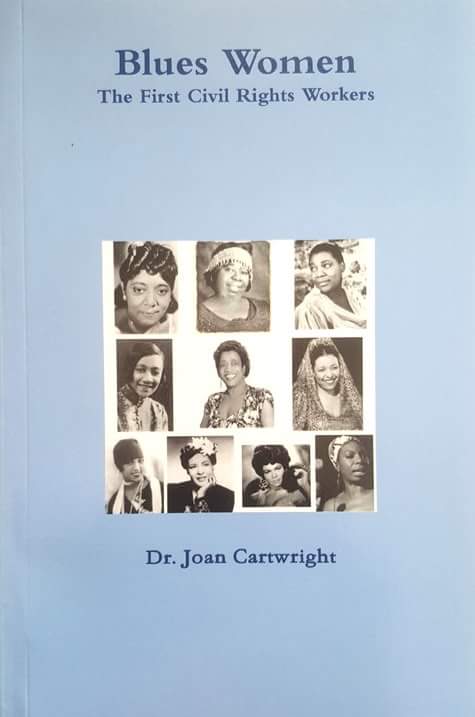
Dr. Cartwright is clearly a person of many parts and high energy. In the 12 years of its existence, WIJSF has released six compilation albums, comprising 63 songs from 45 women composers. Since 2008, she has hosted 300 episodes on MUSICWOMAN Radio, published four Catalogs of Women in Arts & Business and Musicwoman Magazine’s premier edition. She has published 14 books with her own FYI Communications, Inc. on lulu.com. She is an ASCAP-affiliated publisher and songwriter, a member of National League of American Pen Women, and through WIJSF maintains international relations with diverse peer groups. She blogs and has contributed to the South Florida Times, In Focus Magazine, Global Woman Magazine and Encyclopedia of the African Diaspora. She has an impressive array of academic accreditations and has been honored by several professional associations. But one senses that the devotion of her WIJSF members, and the continuous support of her daughter Mimi Johnson, with whom she owns MJTV Network (“Positive Influential Television”), is based on personal qualities that imbue her larger projects.
Among those is a goal to build the Musicwoman Archive to house the musical and literary works of women musicians and provide performance and educational center where women musicians can thrive. In educational workshops Dr. Cartwright presents, which highlight the pitfalls and benefits of the music business, she insists that “Knowing music theory is a step in the right direction for any singer who truly wants to excel in the world of music!” Yet her own breadth of endeavors — acting, singing, media creation, marketing, advertising, public speaking, and public relations skills as well as command of theory are arrows in her quiver — attests to the reach she models for all women, all artists, anyone whose ambitions extend to being creative, innovative, expressive, self-realized, in the moment while communing with others, sharing experience, telling truth, seeking beauty — in other words, living as a Jazz Hero. ~ Howard Mandel
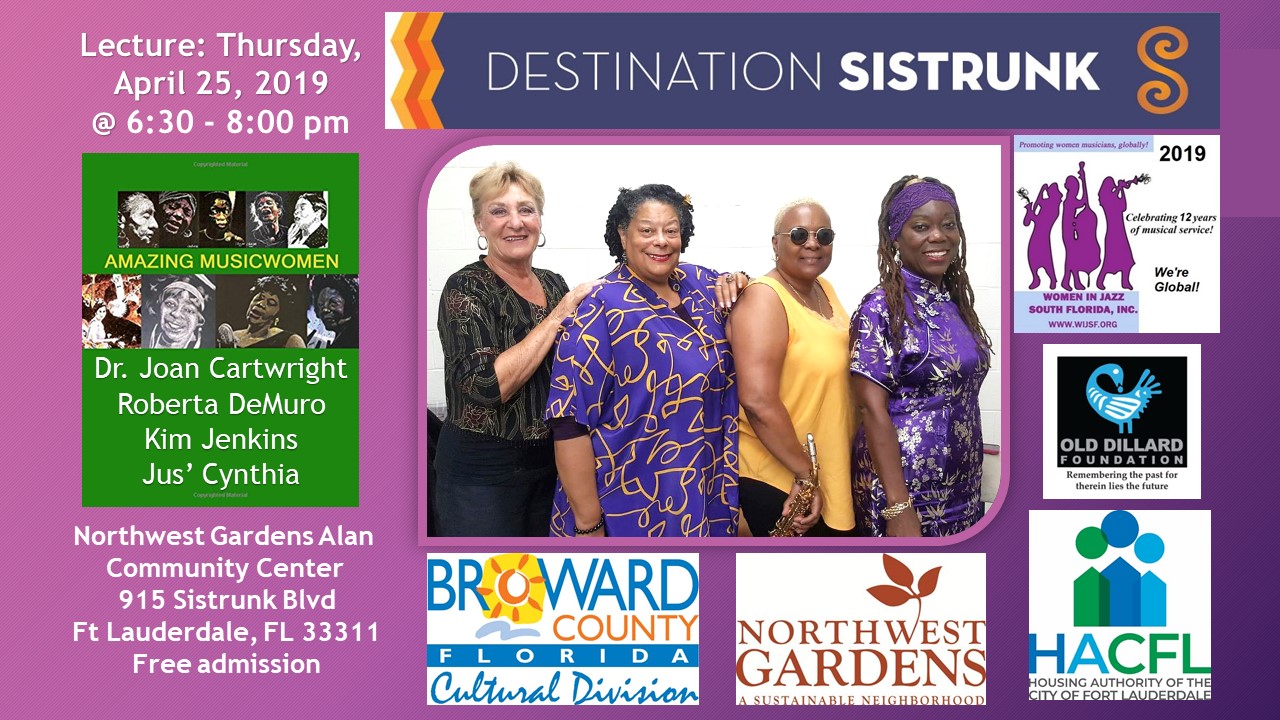
Dr. Cartwright will receive her JJA Jazz Heroes Award on April 25, 2019 at this event



 Dr. Diva JC - Scholar . Teacher . Author